
'Today the Chinese think they can slap India, and there will be no consequences.' 'They must be made to feel the consequences through any and all means,' says Rajeev Srinivasan.
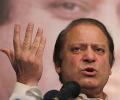
The biggest success of Nawaz Sharif's visit to India is that it will lessen mistrust between the two countries, writes Amir Mateen from Islamabad.

Lessons Nestle must learn from its big mistakes

Right from conducting nuclear deterrence patrols in 2015 to its destructive space programme, from its back-tracking on economic commitments to its hardened positions on Sino-India border deal -- its approach with India spells Adversarial with a capital A, says Shehzad Poonawalla

We bring you this excerpt from Shaili Chopra's book, When I was 25.

From early indications, the Modi government's foreign policy seems to be pragmatic and reciprocal, says K G Suresh.

'As in the Panchatantra tale of the cat and the monkeys, it is possible for the clever swing State to play off the two competing powers.'


'China's excessive military aid to Pakistan is the real elephant in the room as far as Sino-Indian relations are concerned. India should be confident enough to accept a degree of closeness between China and Pakistan, since China may wish to use this link for its foray into the Muslim world.' 'But the Chinese must be realistic enough to know that as time passes, the tactic of using Pakistan as a proxy to check India will yield diminishing returns. The US tried it for 60 years but failed, so will China,' says Colonel Anil A Athale (retd).

'India should think big: About how in a multi-polar world, India can indeed be one of the poles, rather than being a secondary power that has to worry about 'alignment' with one of the poles. A G3 in other words, India should look to getting others to align with itself rather than the US or China,' says Rajeev Srinivasan.
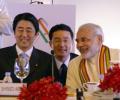
'Both nations have a common problem: A rampaging, jingoistic and hostile China which is making substantial territorial claims. In the long run, Japan and India are going to be the victims of Chinese aggression -- so they might as well hang together to contain China,' argues Rajeev Srinivasan.

With Beijing having had a profound rethink on India's admission as a full member of the Shanghai Cooperation Organisation, the tectonic plates of the geopolitics of a massive swathe of the planet stretching from the Asia-Pacific to West Asia are dramatically shifting. That grating noise in the Central Asian steppes will be heard far and wide -- as far as North America, says Ambassador M K Bhadrakumar.
